
Robot Unload Conveyor
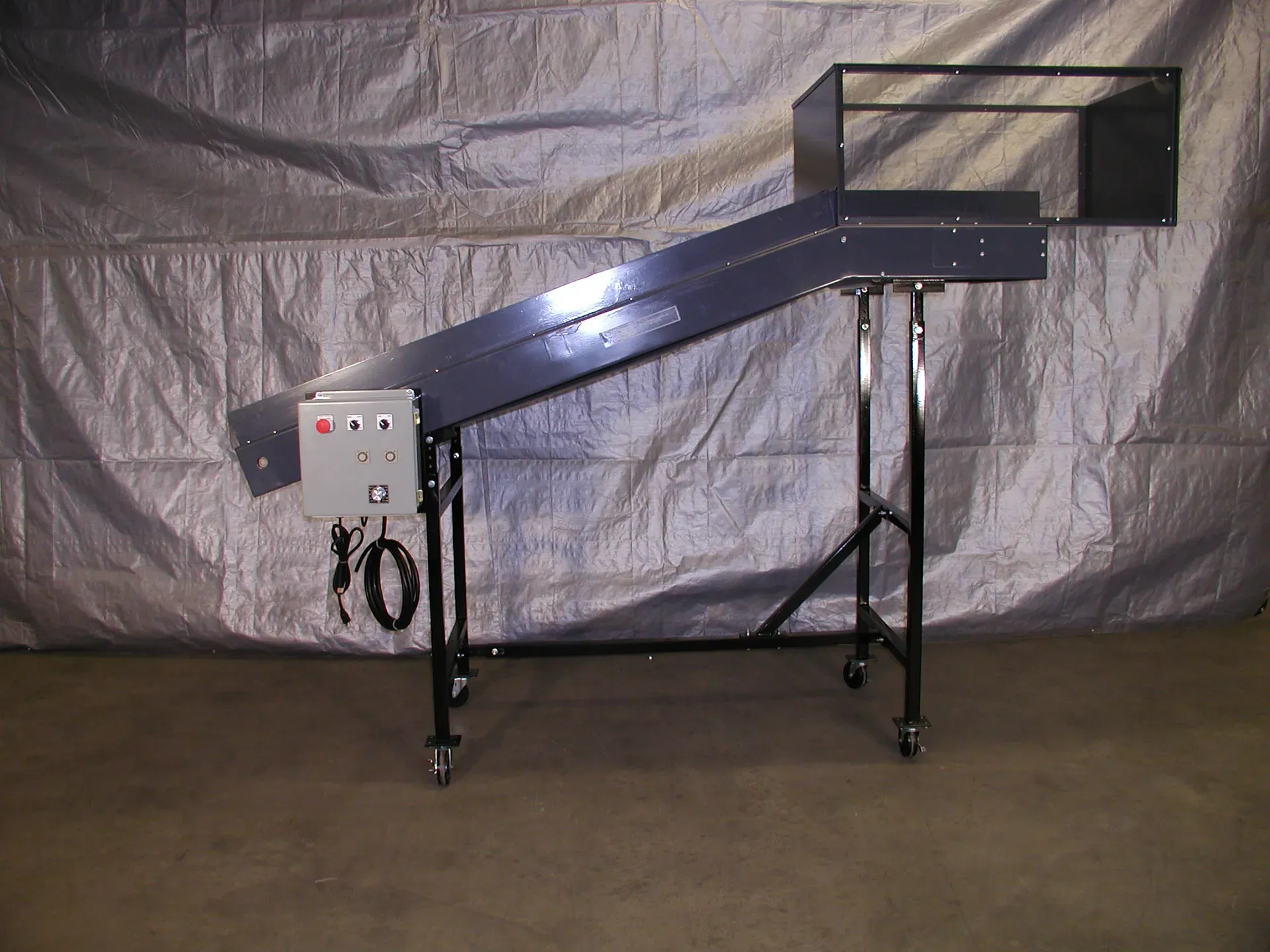
The robot drops parts on a level section. The conveyor brings them down to operator level, or straight to the box. Built for the cell you actually have.
What it does
From the robot to the operator, without the drop
Your sprue picker or full-servo robot needs a level, open target. Your operator needs parts at a height they can reach. A LaRos robot unload conveyor gives you both in one piece.
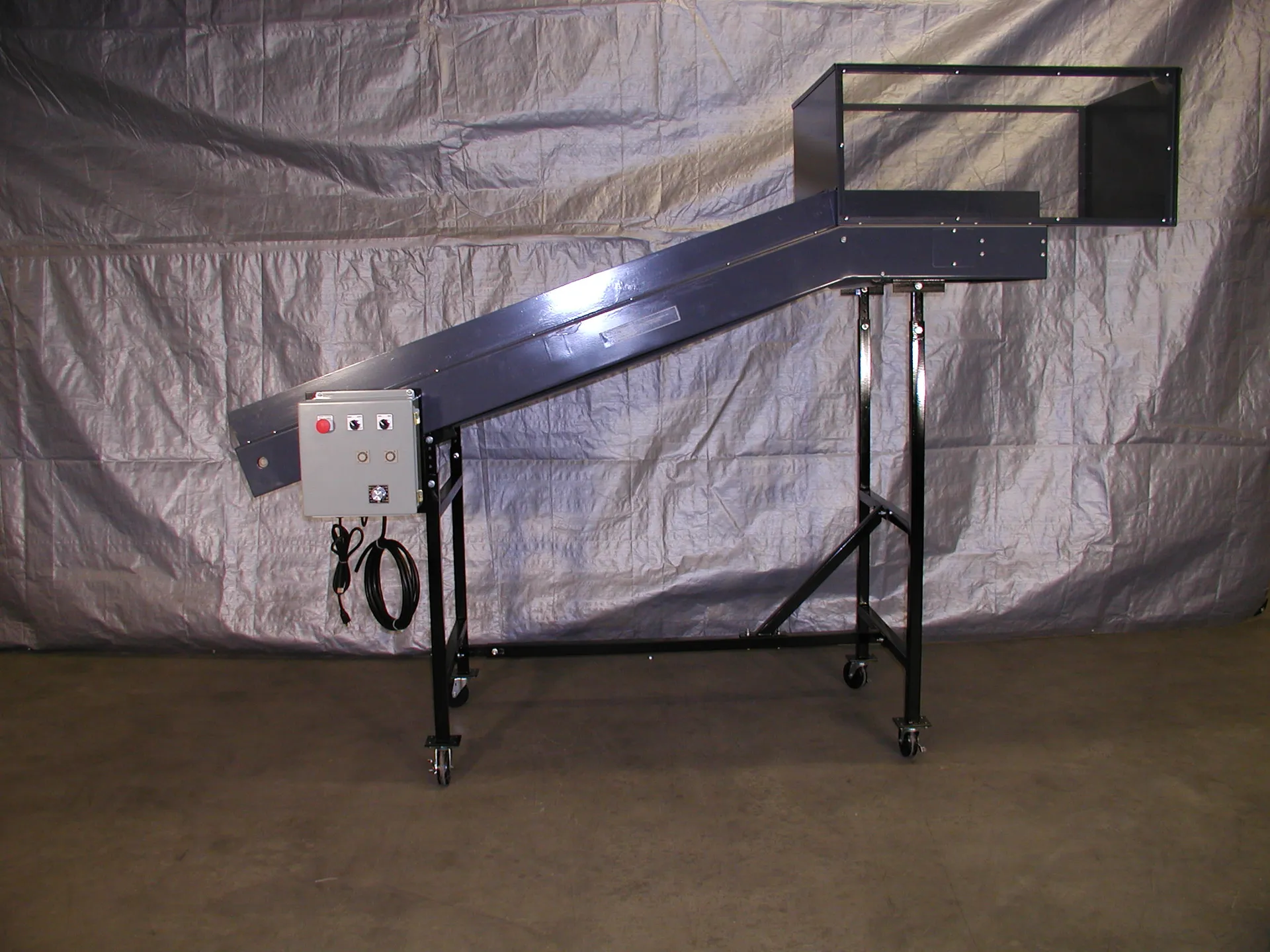
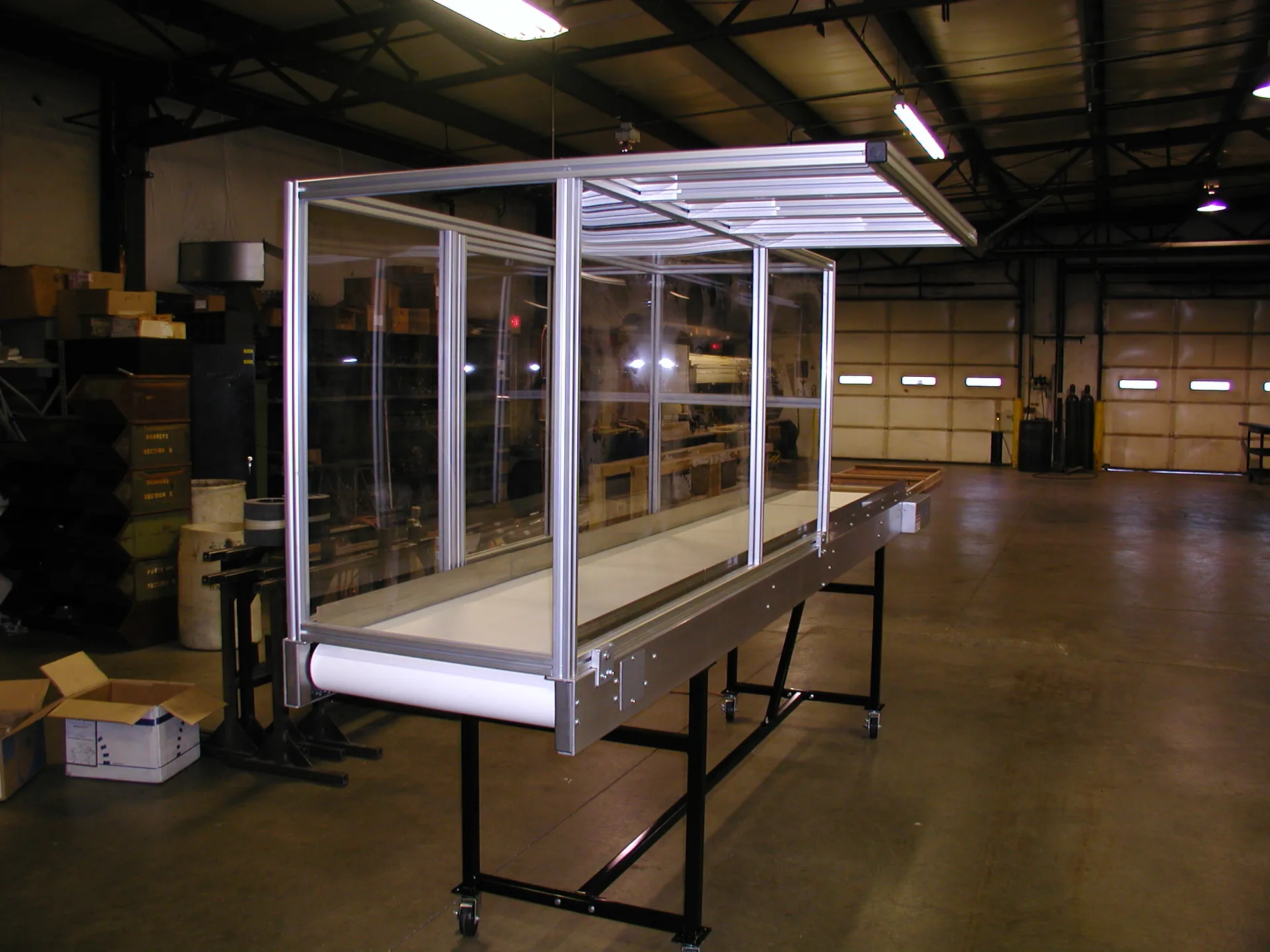
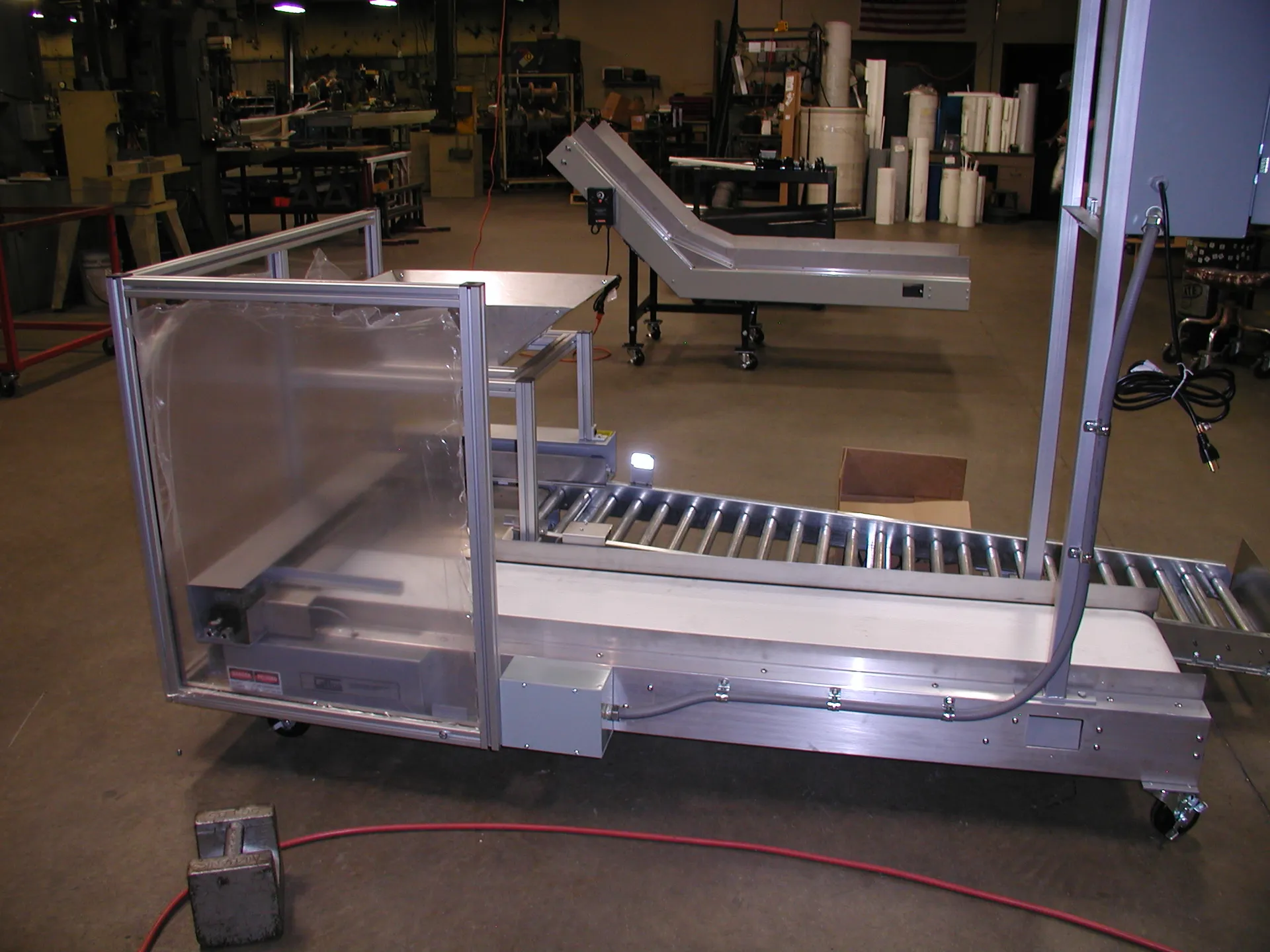
530 / 730 series (horizontal to decline): one piece, with a level section for the robot discharge area that then declines to bring parts down to operator level.
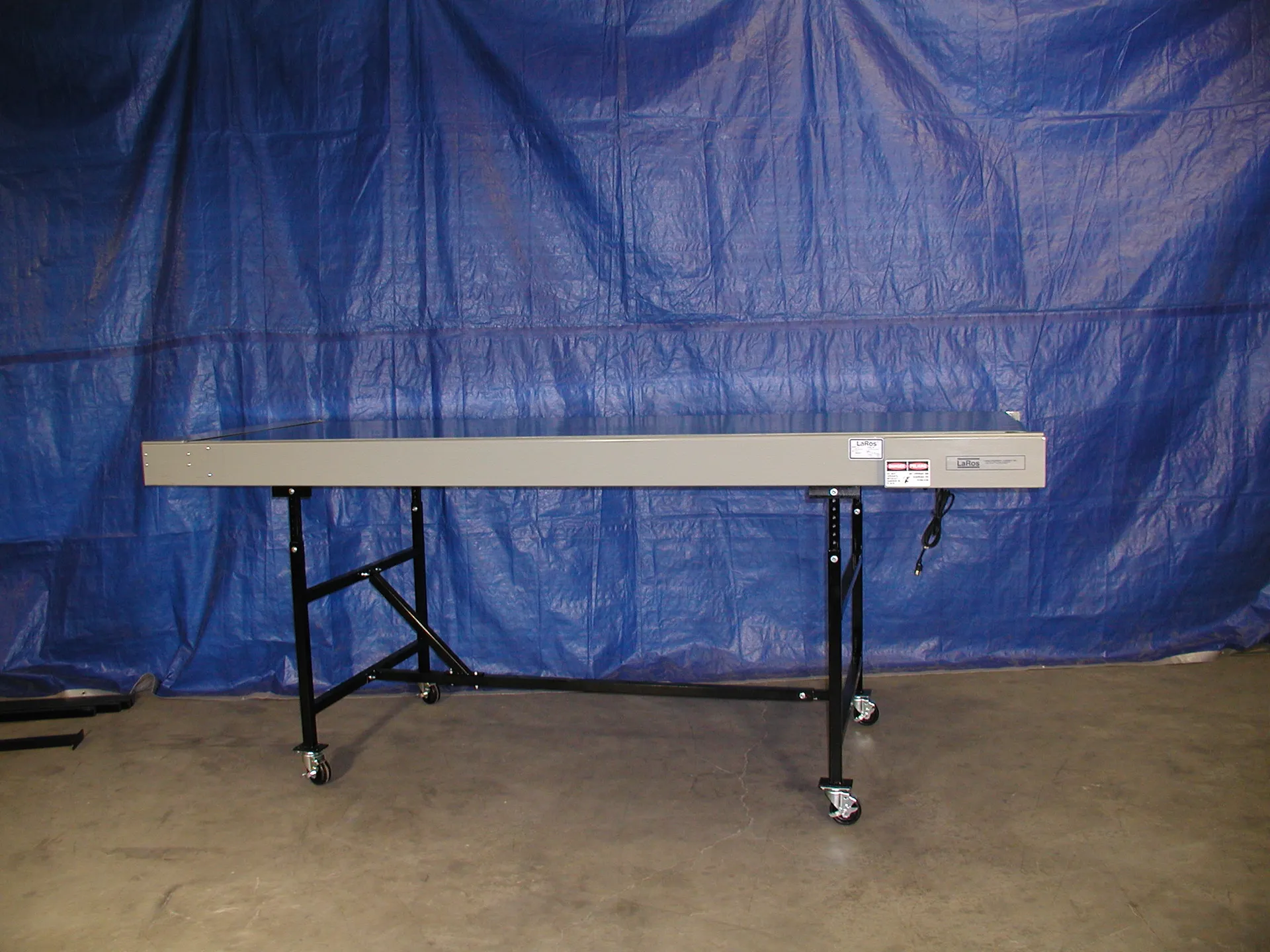
510 series (inline): a straight conveyor beside or under the press for robot unload where you do not need the height change.
Both come in E-series welded steel. The 510 is also available as an A-series structural aluminum frame.
Standard features
What you get
- One piece horizontal-to-decline frame (530 / 730)
- 4" side rails that overlap the belt 1/2" on each side (can be deleted)
- Grip-top belting keeps flat parts from sliding, even on a 45 degree decline
- Crowned pulleys for tracking. No extra tracking hardware to adjust
- UHMW-PE belt slider and contact surfaces
- No exposed motor or drive components on internally mounted drives
- Adjustable tubular legs, with optional locking swivel casters
- 115VAC single speed drive standard. Variable speed recommended
- Shipped fully assembled with the belt tracked
Specifications
Robot unload conveyor specs
Every unit is built to order. These are the starting points. Send us your cell layout and we will size it.
| Models | 510 inline, 530 / 730 horizontal to decline |
|---|---|
| Frame | E-series: formed steel channel, welded, 10 gauge (5XX) or 7 gauge (7XX). A-series (510 only): structural aluminum, bolted tubular cross members |
| Belt widths | [SPEC NEEDED: standard belt widths for robot unload] |
| Length | Built to your length. Frames up to 120" ordered in inches, longer in feet and inches |
| Decline angle | Grip-top belting holds flat parts at up to 45 degrees. [SPEC NEEDED: standard decline angles offered] |
| Load (robot drop) height | [SPEC NEEDED: standard and max load height] |
| Discharge height | To your operator or container height |
| Drive | 115VAC single speed gearmotor standard. Variable speed (SCR DC or 3-phase VFD) recommended. All voltages available |
| Max part weight / load | [SPEC NEEDED: belt load rating] |
| Finish | Primer and oil-base enamel, any color you want (steel units) |
Reversing or indexing a lot? Plug reversing or indexing a single speed AC motor more than about 20 times an hour cuts its life. If your robot interface will index or reverse often, spec variable speed.
In the shop
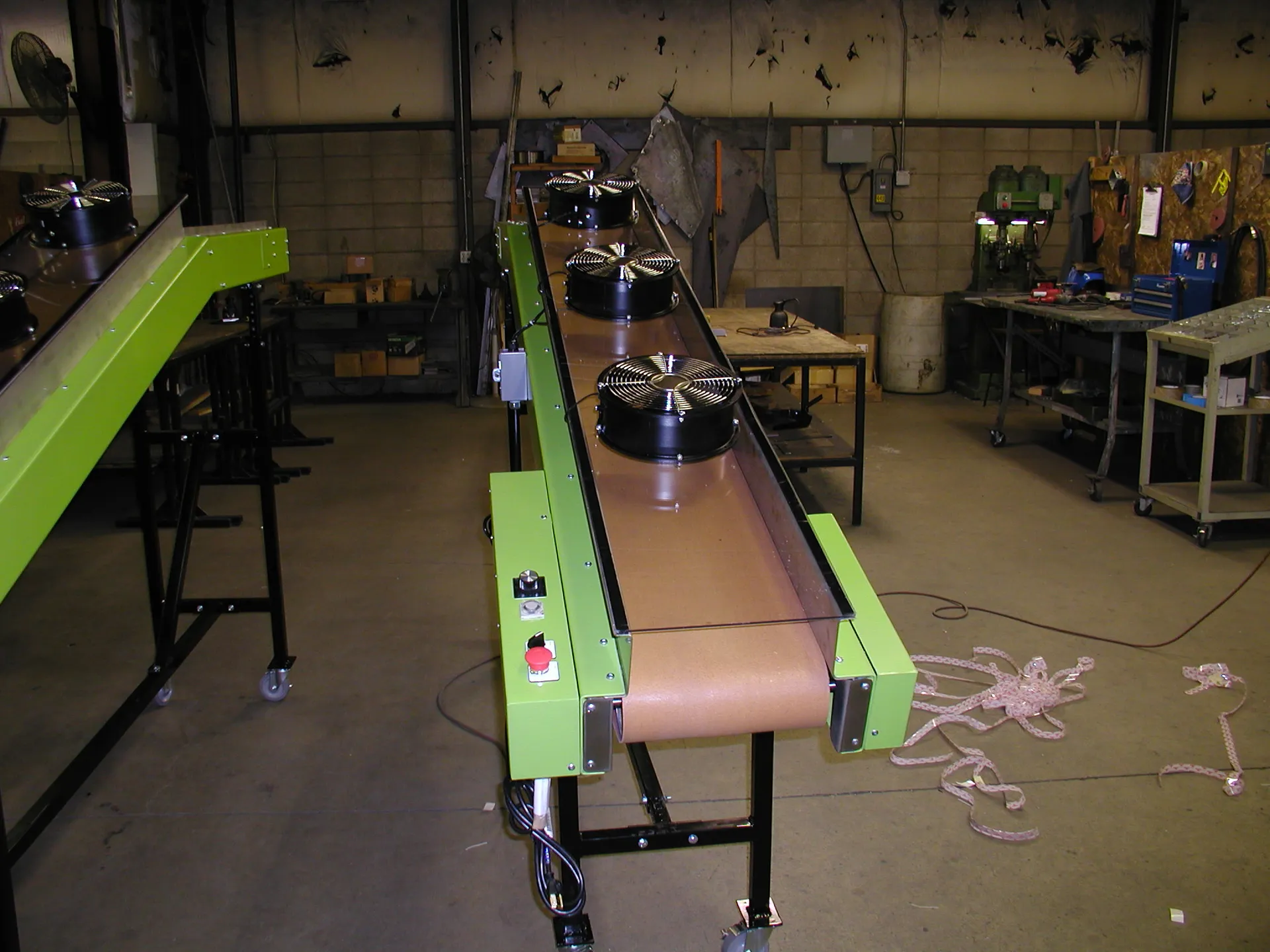
Robot unload conveyors we have built
Why LaRos
Built heavier than the cell needs
Ships ready to run
Fully assembled with the belt tracked, as big as fits in a dry van. You uncrate it, set it and add power. No week of assembly and belt tracking on your floor.
Welded C-channel frames
10 gauge steel channel, welded, with 3" x 2" tube cross bracing. Not T-slot aluminum extrusion. People stand on conveyors, so we build them to take it.
Bigger crowned pulleys
4-1/2" crowned pulleys at minimum, on 3/4" to 1-7/16" shafts. The bigger bend radius tracks better, carries heavier welded cleats and makes expensive belts last longer.
Heavier axles, bearings and stands
Larger axles and bearings than the light-duty lines, on sturdier stands. Usually Bodine gearmotors.
Smooth sides
Take-ups sit inside the frame, not hanging off the outside. No exposed spinning axles at the side of the conveyor.
Built to last decades
We regularly supply parts for LaRos machines 30 years old and more, from job and serial records going back to 1976.
Options for this conveyor
- Robot Interface
- Reversing
- SMART-VEYOR Automatic Reject Control
- Traffic Cop
- Cooling
- Speed Controls (Variable Speed / VFD)
- Metal Detectors
Often paired with
- Under Press Conveyor
- Reject Parts Chute / Diverter
- Tote / Container Indexing
- Part / Runner Separators
LaRos. Invest in Uptime.
Send us your part. We send back a drawing and a price.
Tell us what the conveyor carries, the machine it serves, and the space you have. Replacing or duplicating a LaRos unit? The serial number on the tag is all we need to start.